How to Create a SERP Strategy in 2026


WRITTEN BY
Kev Wiles
I’m a Fractional SEO Specialist with 12+ years’ experience working with eCommerce brands. I focus on making SEO simple, clear, and effective helping businesses cut through the noise and unlock real growth.
Search has changed more in the last 18 months than it did in the previous ten years combined. AI Overviews reshaped discovery, product grids took over commercial SERPs, and structured data quietly became one of the biggest performance differentiators for eCommerce brands.
And yet most teams still approach SEO like it’s 2017, avoiding the bigger tasks such as optimising your Google product feed or implementing more detailed SCHEMA on product pages.
We’ve seen in 2025 the SERP continue to drastically change and what most brands don’t realise now is they actually need a SERP strategy, a way in which they can understand not only the optimisation needed but also the media type they should focus on to drive revenue.
In 2026, winning in search isn’t about ranking first. It’s about appearing everywhere a shopper is making a purchase decision.
The Reality of Search in 2026
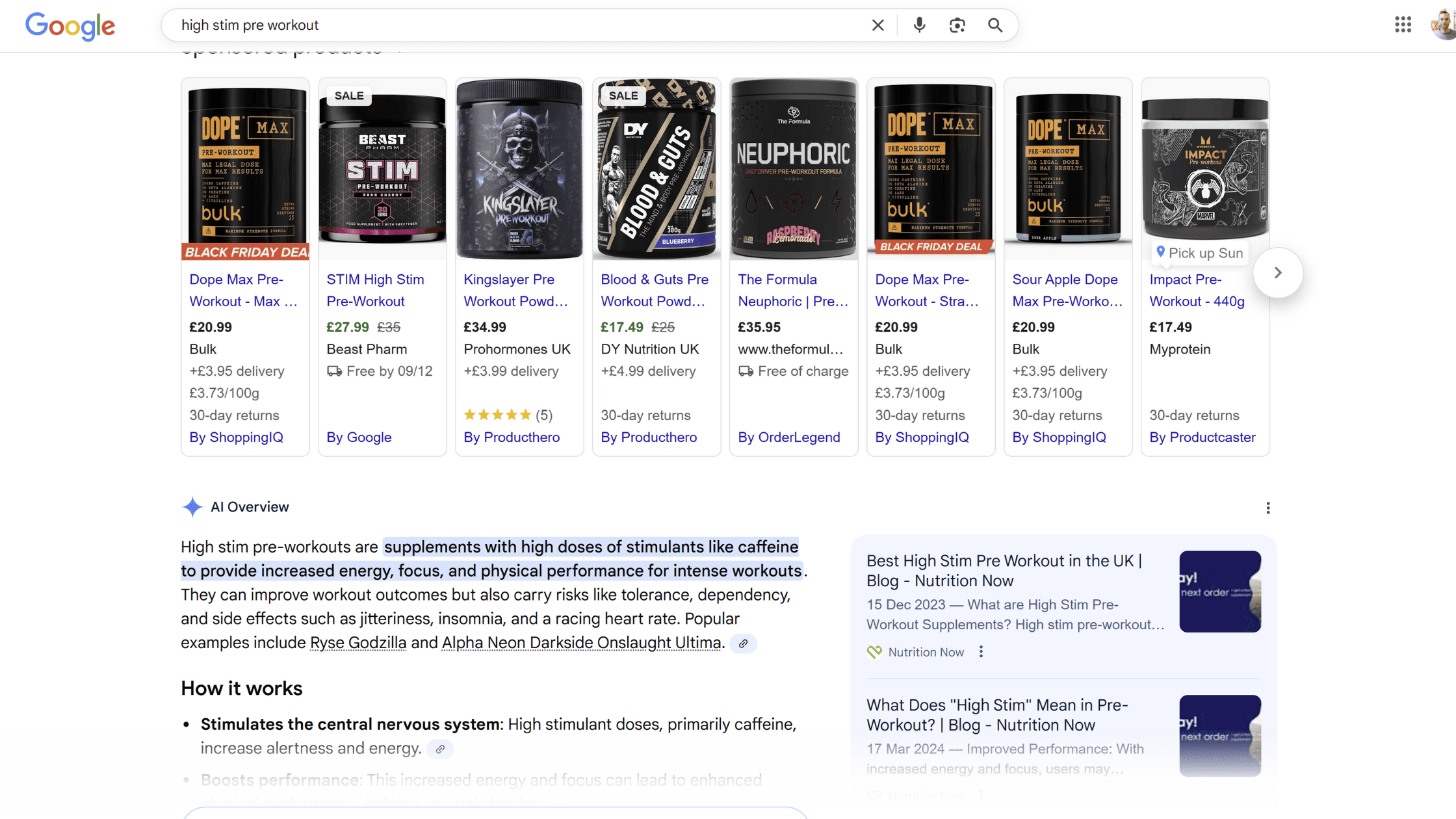
SERPs are no longer a single page of links. For retail, they’ve fragmented into purchase-driving surfaces that each need their own optimisation approach:
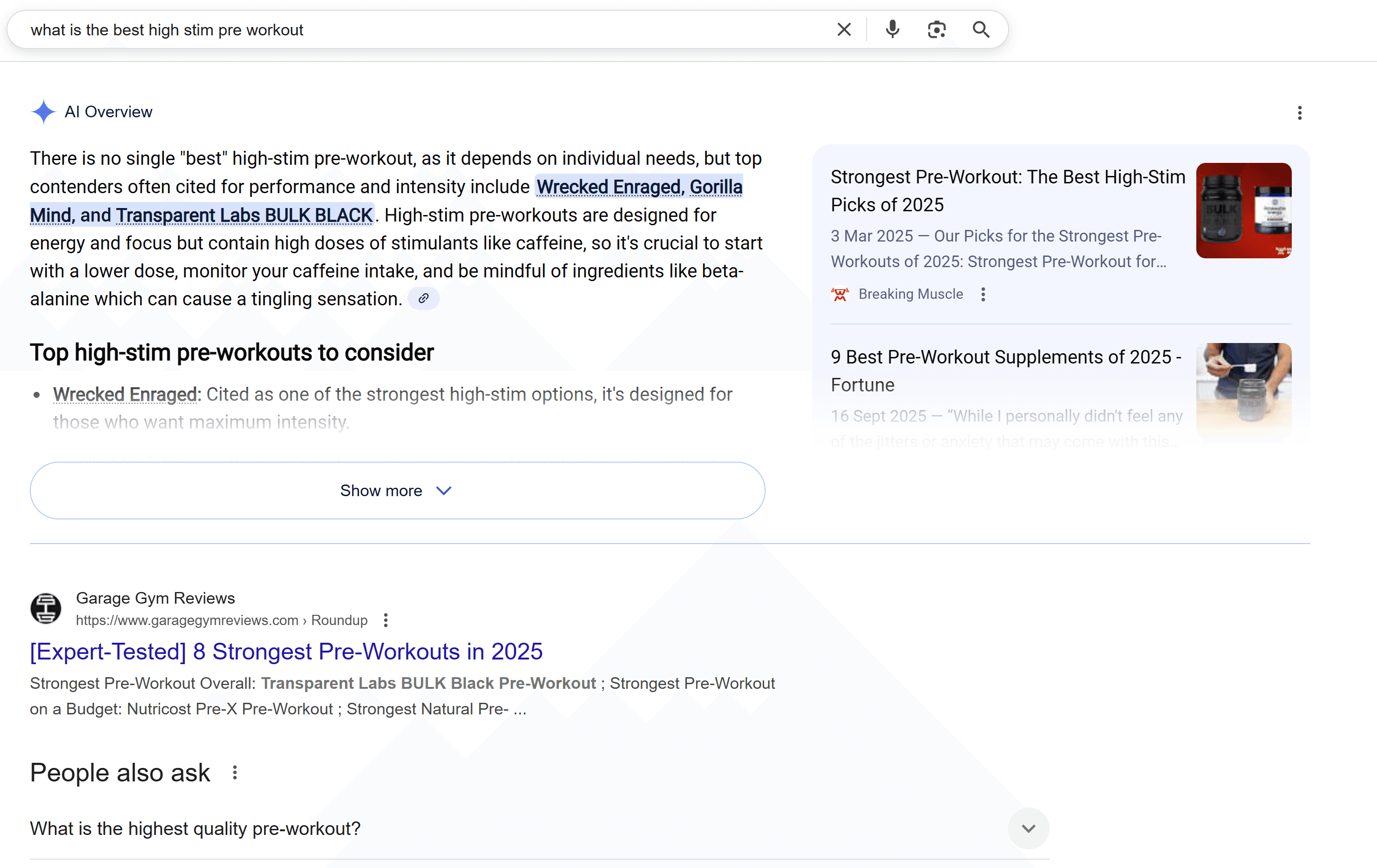
AI Overview shopping summaries
Merchant product grids
Free listings
“Best Products” comparison modules
People Also Ask
Image carousels (algorithmically chosen product/lifestyle shots)
Short-form video shopping blocks
Local pack for brands with stores or stockists
Review aggregations
Collection-level sitelinks
Reddit/Q&A modules (buyer research signals)
Even ChatGPT Shopping, Perplexity, and Bing Copilot have their own “SERP equivalents” and they all rely heavily on product data completeness and brand authority.
A SERP strategy for eCommerce is no longer about single keyword rankings it’s about owning surfaces, especially the commercial ones that actually convert.
What a SERP Strategy Actually Means for eCommerce Brands
Most eCommerce teams think they have a SERP strategy but what they really have is a keyword list and some collection-page copy.
A true eCommerce SERP strategy covers:
1. Understanding which SERP features influence purchases in your category
Fashion → images, product feeds, video
Homeware → images, comparison modules, AI explainer cards
Supplements → reviews, FAQs, medical-style summaries
Electronics → specs tables, comparison modules, product knowledge panels
2. Knowing where competitors dominate visibility
Which brand owns product grids?
Who appears in “Top Picks”?
Who has feed-complete listings?
Whose reviews populate AI Overviews?
3. Engineering product data, attributes, and imagery to match those surfaces
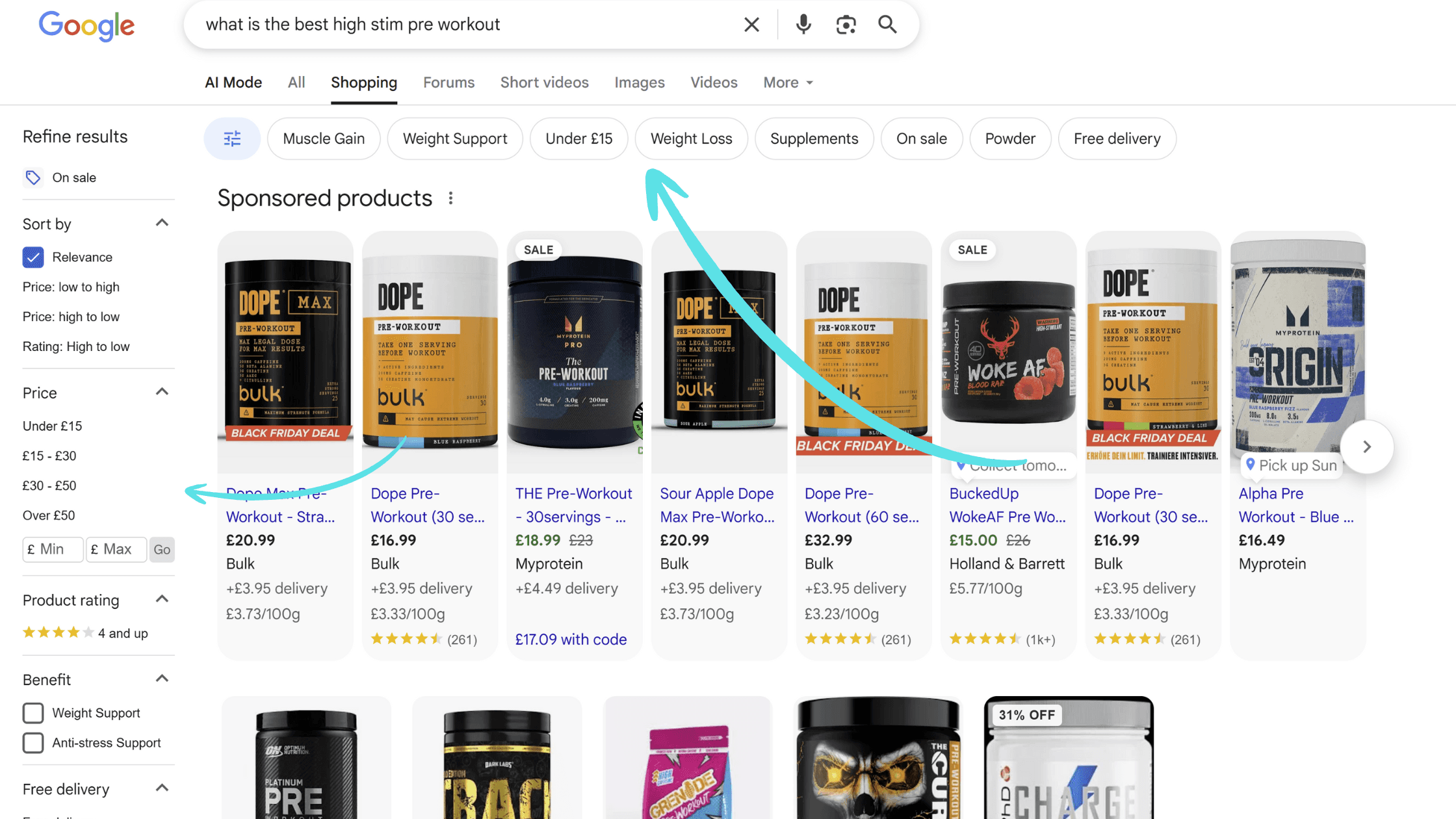
High-performing SERPs are built on structured data — not just well-written text.
4. Prioritising fixes based on revenue impact
GTIN completeness > rewriting collection intros
Feed attribute depth > long-form PDP descriptions
Imagery expansion > blog content in most retail categories
5. Tracking exposure across surfaces, not rankings
Rankings are now the weakest predictor of revenue.
Surface visibility is the strongest.
Why a SERP Strategy Matters Now More Than Ever
CPCs rose again across Meta, Google, TikTok and Amazon in 2025 and with tighter margins, brands can’t outbid forever.
AI Overviews removed a portion of organic click-through entirely, especially in commercial categories.
Meaning your visibility now depends on whether your products qualify for those modules, not whether your PDP is “optimised.”
Brands winning in 2026 all share one trait:
They optimise for how Google displays products, not how it indexes pages.
A SERP strategy gives eCommerce brands:
More entry points (PDPs, PLPs, brand, editorial, reviews, product feeds)
Higher click-through from richer, more visual assets
More surfaces where customers see your products before competitors
Reduced dependency on CPCs
Better data for LLMs and AI shopping systems
Stronger cross-channel performance (feed → ads → SEO → AI systems)
This isn’t an SEO strategy it’s a revenue acquisition strategy.
Step 1: Audit Your SERP Landscape
This is where most brands go wrong. They look at keyword positions but ignore the layout in front of them, Ahrefs or even just a manual search can be a great way to uncover the SERP features and media types being returned for any given query.
When I build a SERP strategy for a client, I map everything:
Which product grids appear for your high-intent keywords?
Which brands dominate comparison modules (Top Picks, Best Products)?
Which PDPs Google chooses for AI Overview summaries?
Which image ratios Google prefers for your category?
Where your competitors win using product feeds rather than SEO pages?
Which platforms reference your products (Reddit, YouTube, TikTok, Blogs)?
Step 2: Match Search Intent to SERP Type
Intent isn’t a keyword, Intent is what Google shows. If a SERP is 70% videos? Your blog post won’t win. You need to ensure you have the right content above and beyond traditional text to rank within Google & more importantly, capture the click.
If a SERP is dominated by product grids? Your product data needs fixing before content even matters. You need to work with your internal team to enrich product attributes to capture more exposure within the SERP.
Here’s how intent actually behaves in 2026:
Informational → Guides, FAQs, How-tos, comparisons
Commercial → Product grids, Merchant listings, reviews
Visual intent → Images, user-generated content, short-form videos
Transactional → High-quality feeds, clear USPs, complete attributes
Most brands mismap intent, and their visibility suffers as a result.
Step 3: Engineer Product Data & Content for SERP Features
This is where the real gains are especially for DTC brands. It’s not an easy fix but you can drastically improve you’re overall click growth
If your product data is thin, inconsistent, or missing GTINs, you’re limiting your ability to appear in:
Product grids
AI Overviews
Filter modules
Comparison layouts
Knowledge panels
ChatGPT Shopping feeds
1. Product Schema (the complete version not the Shopify default)
Attributes like material, care instructions, audience, energy efficiency, included components, variant details, sustainability, etc.
2. Merchant Center feed quality
Most DTC brands still treat Merchant Center as a PPC requirement. In reality, your product feed now plays a major role in organic visibility, product grids, AI Overviews, and every shopping-related SERP surface.
Your feed is now one of Google’s primary product data sources
Google leans heavily on feed data because it’s structured, consistent, and easier to verify than on-page content. If your feed is thin or inconsistent, your visibility across commercial SERPs drops instantly.
GTIN completeness
Missing or incorrect GTINs block you from comparison modules, free listings, and product grids.
Most brands see immediate uplift just by fixing this.
Attribute depth
Rich attributes (material, fit, style, intended use, colour family, etc.) help Google match your products to more queries and shopping filters. Thin attributes = thin visibility.
Feed and on-site data must match
If the feed and PDP say different things, Google trusts neither. Consistency is now a ranking signal make sure the data and product details you have on site replicate those in your data feed.
3. Imagery built for SERP surfaces
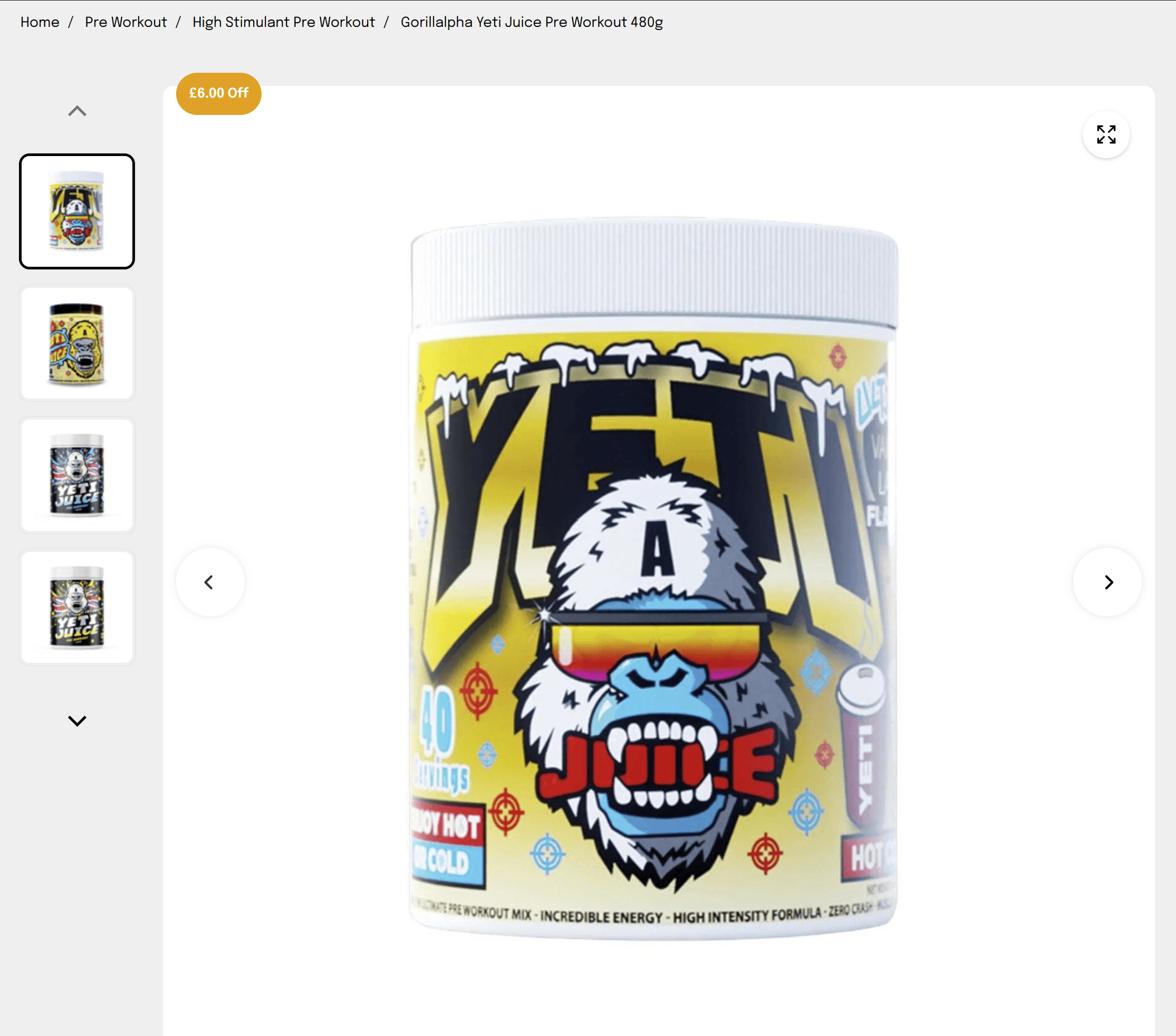
Imagery is no longer a creative nice-to-have it’s one of the clearest levers for improving product visibility across organic product grids, AI surfaces, free listings and Shopping. If your images don’t match what these surfaces need, you won’t show up.
Produce images in multiple ratios
If you only upload 1:1 pack shots, you’ll miss half of the surfaces your competitors appear in.
Minimum required ratios:
1:1 → product grids, Shopping placements
4:5 lifestyle → Discover, image carousels, mobile-led modules
16:9 or cropped wides → AI Overview summaries, “top results” composites
Tall crops → Visual stories, trending modules
Add lifestyle images for context (Google rewards products it can “explain”)
Lifestyle imagery helps Google understand use cases, audience, environment, and fit — all of which feed AI-generated results and comparison modules.
Action:
Add 1–2 lifestyle shots per product
Ensure diverse angles and clear context
Avoid overly stylised shoots that hide product detail
This directly increases eligibility for Discover, image packs, and visual shopping modules.
Build supporting “informational images”
AI Overviews often include the images Google thinks best “answer” the question. Brands with simple explanatory images win these placements.
Examples:
Materials callout image
Fit/size guide card
Ingredient breakdown
Feature highlights (e.g., “breathable”, “waterproof”, “sustainable”)
Action: Create lightweight infographic-style PNGs for each product category. They consistently appear in AI modules because they summarise information visually.
Provide enough angles for Google to understand the product
Google vision models assess attributes like material, colour, shape, stitching and logos. If you only have one or two images, match confidence is lower — meaning weaker placement.
Action:
Front
Back
Side
Detail/close-up
Lifestyle shot
This is especially important for apparel, accessories, homeware and fitness gear.
Use descriptive alt text
Alt text isn’t for keyword stuffing anymore; it’s for attribute confirmation.
Action:
Write alt text like you're explaining the product to someone who can’t see it:
“White organic cotton crew neck t-shirt with relaxed fit” Not
“Men’s t-shirt men’s t-shirt buy t-shirt UK”.
Google uses this to improve product matching and SERP categorisation.
Ensure image quality
Google ranks and displays products more prominently when it can trust the merchant.
Action:
Avoid low-resolution or compressed images
Avoid inconsistent backgrounds
Use clear lighting and colour-accurate editing
Keep framing consistent across variants
This directly improves both Shopping ad performance and organic free listings.
4. Page structures that answer questions instantly
Google’s commercial SERPs are increasingly built around instant answers. If your product or category pages don’t surface key information immediately, you’ll struggle to appear in:
AI Overviews
People Also Ask
Product comparison modules
Attribute-based filters
“Best for…” style commercial guides
Rich results
This isn’t about adding more content it’s about structuring pages so Google can extract, verify, and display information with confidence.
Add an FAQ block to directly match real user questions
Most brands still treat FAQs as an afterthought. Consider adding in FAQs on key collection based landing pages
AI Overview inclusion
PAA (“People Also Ask”) visibility
Featured snippets
Long-tail commercial queries
Category-level authority
Action:
Add 4–6 FAQs based on actual search behaviour
Keep answers short (80–90 words)
Use SCHEMA so Google can extract them cleanly
Target real buyer questions: fit, sizing, compatibility, materials, returns, care, comparison
Put the key commercial content before the long-form description
Google weights top-of-page content more heavily for understanding intent.
Action:
Move these up the page:
Key features
Specs
Value props
Fit notes
Variant callouts
Shipping/returns info
Step 4: Build Assets That Trigger High-Value Features
Every SERP feature has a specific input Google relies on. Here’s how I help brands engineer content:
AI Overviews
Clear, verified statements
Structured data
Brand authority signals
Strong product attribute coverage
Product grids
GTIN completeness
Feed health
High-quality imagery
Videos
Short “explainer” clips
User-generated reviews
Product demos
People Also Ask
Concise answers in 40–60 words
FAQ schema
Step 5: Build a SERP Roadmap Based on Impact
This is where strategy becomes execution, while you should still be doing keyword research, you should also now be looking at intent. Your overall SEO strategy and roadmap should include:
Quick wins
Clean up product data
Improve core landing pages
Add missing schema
Fix internal linking
Mid-term gains
Build comparison guides
Create collection-level content
Improve imagery and UGC strategy
Longer-term plays
Video ecosystem
Editorial authority
Tools and calculators
New feed formats (ChatGPT Shopping etc.)
Why Most Brands Don’t Have a SERP Strategy Yet
Most brands don’t have a SERP strategy because it’s labour-intensive and requires alignment with more internal teams. A lot of teams chase keywords instead of working backwards from how Google displays results. They rewrite title tags and call it “SEO.”
The brands who win in 2026 will be the ones who adapt their content, product data, and UX to the SERP not the other way around.
Final Thoughts SERP Strategy Is the New SEO Strategy
SEO isn’t dead. Yes it’s massively evolving and ranking #1 is no longer the be all and end all but you can still optimise for search and drive mroe revenue than you ever have done before by matching content to the SERP layout.
Modern SEO is about:
data completeness
format relevance
SERP feature ownership
cross-channel efficiency
and building assets algorithms trust
A SERP strategy gives you defensible visibility, protects you against rising paid costs, and unlocks discovery across new AI-led platforms.
If you want support building a SERP strategy for 2026 one that improves organic, paid, and LLM visibility I'm always happy to walk you through what this looks like for your category and your tech stack.






Kev Wiles - Shopify SEO Consultant © 2026- Stratford upon Avon, Warwickshire, UK