Shopify Collection Pages and GEO



WRITTEN BY
Kev Wiles
I’m a Fractional SEO Specialist with 12+ years’ experience working with eCommerce brands. I focus on making SEO simple, clear, and effective helping businesses cut through the noise and unlock real growth.
How to Get Your Collections Cited, Recommended, and Discovered
Most Shopify brands have invested heavily in product pages. Good descriptions, expanded attributes, review widgets. That work matters. But the collection page sitting above those products the one targeting a keyword with ten times the search volume often has a one-line description, no SCHEMA beyond Shopify defaults, and nothing that tells an AI system what the collection is or who it's for.
That's the gap. And it's why a lot of brands are invisible in AI-driven product discovery right now.
How AI Is Changing Product Discovery
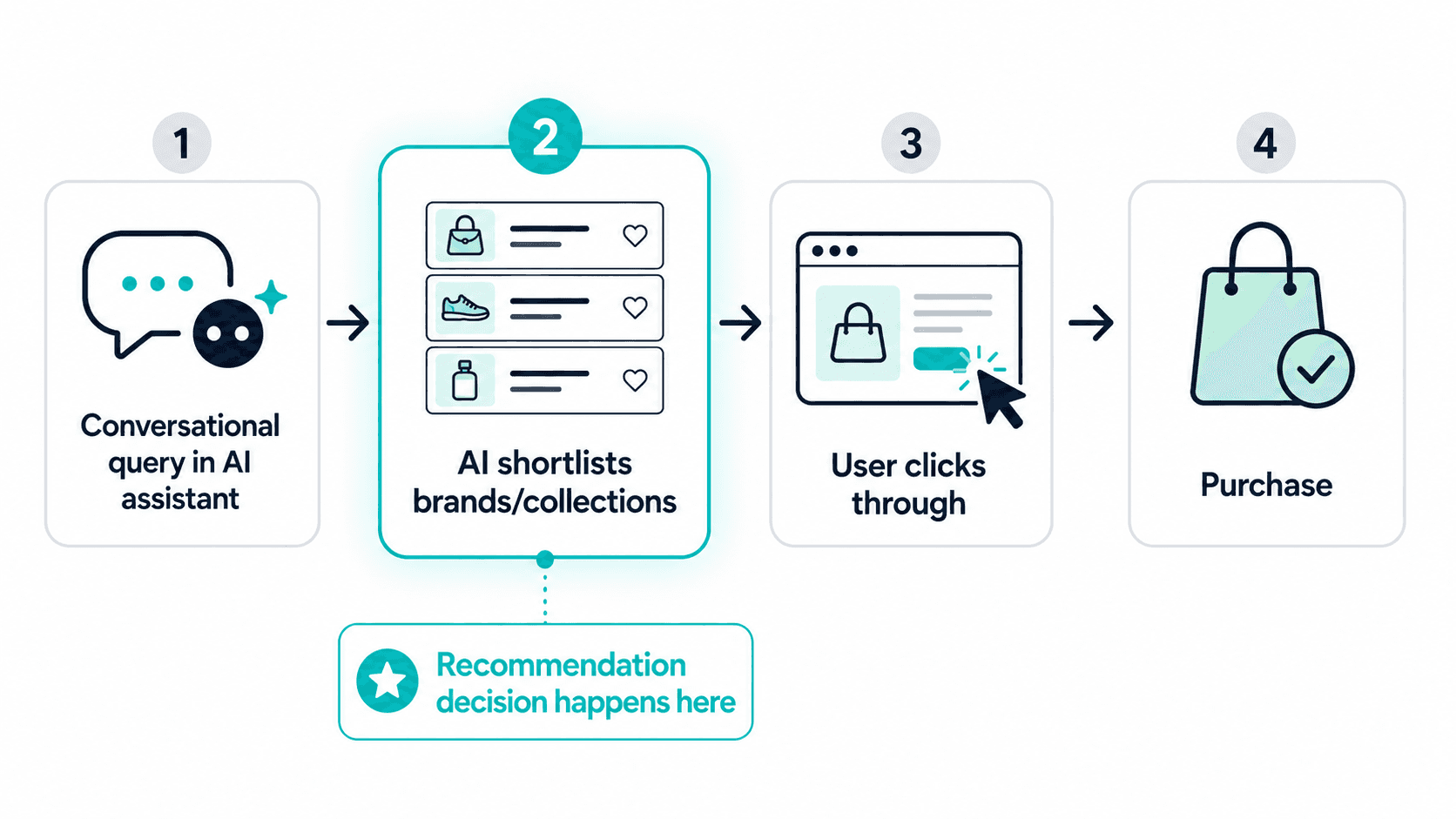
Shoppers are increasingly starting buying journeys inside AI assistants. "What's the best protein powder for women who don't want chalky textures?" "Which GPS dog collar works for large breeds?" These queries happen before a search click. The brands that show up in the answer aren't always the ones with the best product pages they're the ones with the clearest, most interpretable collection-level content.
Ecommerce queries are relatively protected from AI Overview displacement shopping intent triggers AI Overviews only around 3% of the time. People still need to click through to browse and buy. But AI is increasingly acting as a filter before that click happens. If your collection isn't cited, you don't exist in that part of the buying journey.
How AI Actually Reads Your Collections
AI systems interpret collection pages differently from how a human reads them and in some ways more unforgiving.
Signals Before Content
AI systems weight contextual signals heavily before they consider body copy depth. The signals they read first: URL slug, meta title, meta description, internal linking context, and structured data.
A collection at /collections/cat-3 with a meta title of "Shop All" is invisible to an AI agent regardless of what the description says. There's no signal telling it what the collection contains. It moves on to a competitor whose signals are cleaner.
This is the surface-level interpretation problem. Collections with decent copy but weak signal architecture consistently underperform in AI discovery. Competitors with cleaner signals get cited even when their content is thinner.
What Each Signal Needs to Do
URL slug: Keyword-specific and descriptive. /collections/womens-trail-running-shoes works. /collections/footwear-2 doesn't.
Page title: Primary keyword in the first three words. Not just a ranking signal — a primary contextual anchor for AI classification.
Meta description: Describe the collection specifically. What's in it, who it's for, what differentiates it. "Shop our range of products" carries no semantic signal.
SCHEMA: Shopify's default is too shallow. Without custom structured data, an AI system gets a fraction of the context it needs to accurately describe and recommend your collection.
Collection Taxonomy: Structure for AI Agents, Not Human Navigation
How most stores organize collections was designed for human browsing. That logic doesn't map to how AI agents interpret and recommend products.
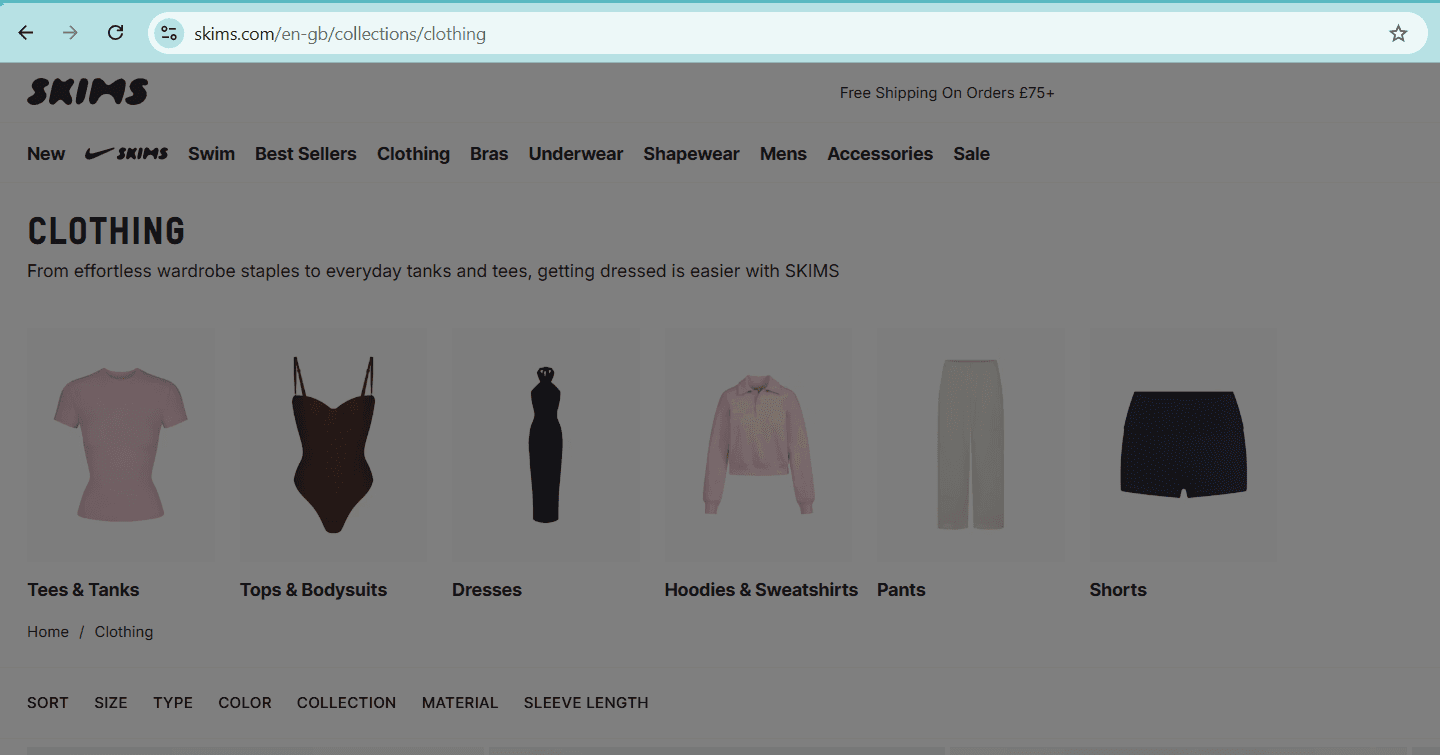
A collection called "Summer Vibes" tells an AI agent nothing. Neither does "Trending Now" or "The Edit." These are merchandising labels built for human navigation. They're meaningless to a system trying to match a collection to a query.
Collections should be structured around specific product categories using logical rules product type, material, use case, audience. Not seasonal tags or front-end themes. Any AI agent reading your collection's URL, title, and description should be able to accurately describe what it contains and who it's for without reading a single product page.
Sub-Collections Are the Fastest Leverage Point
A "Skincare" collection competing for a broad head term is a hard fight. A sub-collection targeting "Vitamin C Serums for Sensitive Skin" is specific, high-intent, and tells an AI assistant exactly who to recommend it to.
Sub-collections multiply AI citation opportunities without requiring new products. Map every meaningful modifier your audience uses by audience, material, use case, concern, price point and each one that represents real search intent is a sub-collection opportunity.
The Content Layer: What AI Needs to Cite You
Getting signals right is the prerequisite. Content gives AI systems the substance to confidently recommend your collection over a competitor's.
Above the grid (50-100 words max): Primary keyword in the first sentence. What the collection contains, who it's for, one differentiating signal. Nothing more. Every word above the grid pushes products down the page on mobile, a 300-word introduction is a conversion problem.
Good example for a supplement brand: "Protein powders for performance, recovery, and everyday nutrition. Whey, plant-based, and blended options across 15 formulations, from 20g to 35g protein per serving. Third-party tested, no artificial sweeteners." Thirty words. Tells a human shopper and an AI system everything they need.
Below the grid (200-400 words): This is where AI citation happens. Include a buying guide covering attributes and selection criteria, a FAQ accordion (4-6 questions pulled from Google's People Also Ask for your target keyword, each answer 40-80 words written as a self-contained passage), and 2-3 curated customer reviews that naturally contain attribute language.
FAQ Sections Are an Underused AI Visibility Tool
When an AI assistant is asked "what should I look for in a GPS dog collar?" and it cites a specific brand's collection page, that page almost always contained a well-written answer to that question. FAQ content on collection pages directly answers the conversational queries AI assistants are fielding on your behalf.
Source questions from Google's People Also Ask, Reddit threads in your category, and customer service inboxes. These are the questions your buyers ask before they purchase. Answering them on the collection page is how you get cited in the conversations where those questions are being asked.
Schema: The Language AI Speaks
SCHEMA is where most Shopify stores fall furthest behind on AI visibility. Shopify's default structured data confirms a page exists. Custom schema gives AI systems a complete, machine-readable description of what a collection contains.
The schema types that matter for collection pages:
CollectionPage: Declares the page as a structured entity with name, description, and URL.
ItemList: Lists products within the collection in machine-readable format. Tells AI systems what the collection contains — not just that it exists.
FAQPage: Marks up your FAQ so AI systems can extract question-and-answer pairs directly, without parsing HTML. One of the strongest AI citation signals on a collection page.
OfferCatalog: Signals price range and product type. Particularly useful for queries with price signals ("best protein powder under $50").
BreadcrumbList: Establishes the collection's position in your taxonomy — how "Women's Trail Running Shoes" sits within "Trail Running Shoes" within "Running Shoes." The hierarchy is how AI understands the relationship between collections.
Internal Linking and Technical Foundations
Collections as Hubs
Topical authority — the signal that your site comprehensively covers a subject is one of the factors AI systems use to evaluate whether a source is trustworthy enough to cite. A collection page that exists in isolation, linked from nowhere, carries almost no authority signal regardless of its content quality.
Inbound links to your collection should come from: blog posts covering related topics (with keyword-rich anchor text), the homepage for your core commercial categories, parent collections linking to sub-collections, and related sibling collections.
Any collection with fewer than 3-4 meaningful inbound links is underlinked. A quick crawl will surface these.
Technical Checks That Matter for Collections
Crawlability: Confirm collection pages aren't blocked in robots.txt or marked noindex. Confirm your XML sitemap includes all collections.
Faceted navigation: Shopify's native filtering can generate thousands of near-duplicate parameter URLs by default. Valuable facet combinations with real search volume deserve standalone indexed pages with their own content. Everything else should be canonicalized back to the parent collection.
Images: File names and alt text are AI-readable signals. banner-image-3.jpg carries nothing. womens-trail-running-shoes-collection.jpg reinforces the collection's context. Alt text should be specific and descriptive, not decorative.
JavaScript pagination: If your "Load More" button loads products via JavaScript without creating a crawlable URL, AI systems can only access the first batch of products. Support the front-end experience with paginated URLs that can be crawled without interaction.
Agentic Commerce: What's Coming for Collection Pages
Shopify's Universal Commerce Protocol is building toward AI agents browsing collections and completing purchases on behalf of users without a browser. Your collection page becomes an API endpoint an agent can query and transact against.
For this to work, collections need to be defined around specific product categories with complete attribute data behind every SKU. Vague collection definitions and incomplete product data get bypassed.
There are also eligibility requirements a surprising number of stores currently fail:
All four Shopify Legal policy pages must be populated (Terms of Service, Privacy Policy, Shipping Policy, Refund Policy) — these are baseline trust signals AI agents check
Guest checkout must be enabled — agents cannot bypass mandatory login
Shopify Payments must be active for in-context transaction execution
A five-minute audit in Settings > Legal will tell you where you stand.
The brands that win AI-driven product discovery aren't necessarily the biggest. They're the ones that understand what AI systems need to confidently recommend a collection, and build their pages accordingly.





Kev Wiles - Shopify SEO Consultant © 2026- Stratford upon Avon, Warwickshire, UK